Weight Belt for Calisthenics: Dip Belts, Loading and Setup
Guide to dip belts: when to start adding weight, chain against rope, how much to load, and what to check on a belt before buying.
What is a dip belt?
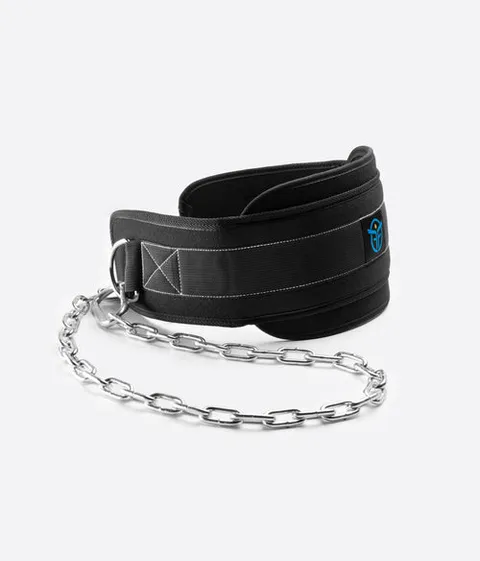
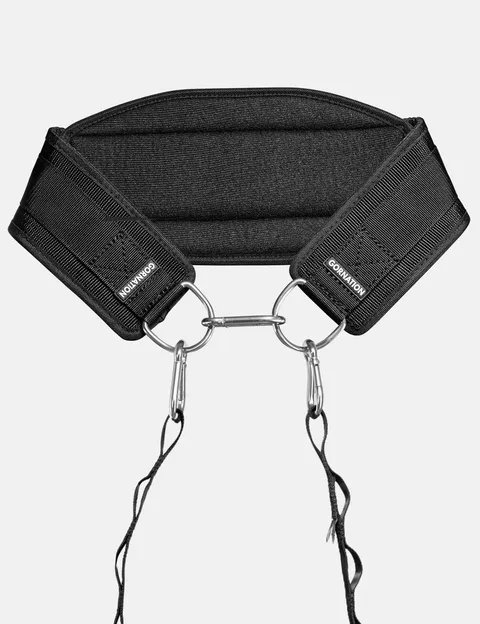
A dip belt is a padded belt worn low on the hips, with a chain or a rope hanging from it to carry plates, a kettlebell or a dumbbell. It is the standard way to add load to pull-ups and dips once bodyweight stops being hard enough.
It is called a dip belt out of habit. In calisthenics it gets used for pull-ups at least as often.
Weight belt exercises
Weighted pull-ups are the main reason to own one. Adding 10 kg to a set of five does more for maximal pulling strength than grinding out sets of twenty, and it transfers directly to the heavy static skills.
Weighted dips are the pushing equivalent, and the dip is one of the few calisthenics movements where you can safely load a lot of weight fairly quickly.
Weighted chin-ups and weighted rows round it out. Some people also use a belt for weighted muscle-ups, though the swinging load makes the transition considerably harder and less safe.
For skill work the belt is the wrong tool. Loading a front lever or a planche does happen, but among already advanced athletes and never from a belt: weight hanging below the hips swings and pulls the body out of the horizontal line the hold is trying to keep. That work is done with a vest, or with plates laid on the back or hips, where the mass stays against the torso. And in any case front lever, planche and handstand progress first through leverage and position, with load coming later.
When to start adding weight
The usual guidance is around 12 clean pull-ups or 15 clean dips before a belt earns its place. The number matters less than the word clean: full hang at the bottom, chest to the bar or shoulders below the elbows, no kipping.
Adding weight to a sloppy rep makes it a heavier sloppy rep. It also concentrates the load on the elbows and shoulders at exactly the angles where a rushed range of motion already hurts.
Chain or rope
| Chain | Rope | |
|---|---|---|
| Best with | Weight plates | Kettlebells, dumbbells |
| Adjustment | Link by link, precise | Knot or loop, approximate |
| Noise | Clanks against the bar | Silent |
| Packing | Heavy, rigid | Flat, light |
| Typical length | Around 90 cm | Around 125 cm |
Chain is the default for a home setup with plates. Rope is better if you train with a kettlebell, if you travel with your belt, or if you train somewhere the noise matters.
Several brands sell both and let you pick, or bundle the two. Eric Flag, for example, sells the belt with a chain, with a rope, or with both.
How to choose a belt
Load rating first, because it is the one number that can fail. Published figures on good belts sit well above anything you will lift: the Eric Flag belt is rated at 300 kg for both chain and rope versions.
Then the back panel. A wide padded back spreads the load across the hips instead of cutting into them. This is what separates a belt you forget about from one you stop using. Nylon with reinforced seams and a foam-backed panel is the common construction.
Then the belt length against your waist. Most belts fit a wide range, but check it if you are at either end of the scale. The Eric Flag belt is 76 cm long, which gives an idea of the usual order of magnitude.
Then the carabiners. They are the cheapest part and the one people replace first.
Loading and technique
Hang the plates so they sit just below your knees, not swinging around your shins. Too long and the stack pendulums on every rep; too short and it catches your legs at the top of a dip.
Stack plates with the largest at the bottom. It keeps the load stable and stops the smaller plates from rattling loose.
Progress in 2.5 kg steps. Weighted calisthenics moves slowly because the limiting factor is the movement itself, not muscle size. Jumping from 5 to 15 kg usually means a shorter range of motion rather than a stronger athlete.
Take the weight off before your last set rather than failing with a loaded belt. Coming off a bar with 20 kg hanging from your hips is not where you want to discover you are done.
Belt or vest
A belt hangs the weight from your hips, which suits anything you do hanging from a bar. A vest wraps the weight around your torso, which suits push-ups, squats, lunges and anything where a swinging load would get in the way.
If you only buy one and you mostly do pull-ups and dips, buy the belt.
Which brands make weight belts
Gornation and Eric Flag both sell dip belts alongside their main range, in chain and rope versions.
FAQ
When should I start using a weight belt?
Once you can do around 12 clean pull-ups or 15 clean dips. Below that, adding weight buys you nothing that more reps would not, and it hides technique problems rather than solving them.
Chain or rope on a dip belt?
Chain for plates, because the links let you set the drop precisely. Rope for kettlebells and for travelling, because it packs flat and does not clank against the bar.
How much weight should I add?
Start at 5 kg and add in 2.5 kg steps. Weighted calisthenics progresses slowly because the movement is the limit, not the muscle.
Weight belt or weighted vest?
Belt for pull-ups and dips, where the load should hang from the hips. Vest for push-ups, squats and anything where a swinging weight gets in the way.
Can I use a weight belt with a doorway pull-up bar?
Check the bar’s load rating against your bodyweight plus the plates first. See the pull-up bar guide: the bar is rarely the weak point, the fixing is.