Gymnastic Rings for Calisthenics: Wood vs Plastic, Training & Brands
Guide to gymnastic rings: wood vs plastic, strap setup, exercises, best brands. Everything for ring training in calisthenics.
What are gymnastic rings?
Gymnastic rings are two circular grips suspended from adjustable straps, used in calisthenics and gymnastics. You will also see them sold as gym rings, calisthenics rings or Olympic rings: same object, the name changes with the shop. Unlike bars, rings are unstable by design. The straps allow the rings to rotate freely, which forces constant stabilization through the shoulders, wrists, and core during every movement. That instability is the point, not a problem to work around.
Ring exercises
Ring push-ups look like standard push-ups but place significantly more demand on the chest, anterior deltoid, and shoulder stabilizers. The rings rotate under load - letting them settle into natural position (turned out at the bottom, neutral at the top) is correct form and reduces impingement risk compared to forcing a fixed wrist position.
Ring dips have more range than most bar dip setups because the rings move to exactly shoulder-width, and there is no frame geometry restricting depth. The instability also means the triceps and anterior shoulder work harder through the full range to control the movement.
Ring rows (body rows) are one of the better horizontal pulling options available for home training. You control difficulty by changing your angle under the rings: more horizontal increases the load. Going all the way to near-vertical is roughly equivalent to a pull-up in difficulty.
Muscle-ups on rings require strength in both the pull and the transition to the press (the bar version is covered step by step in the muscle-up progression). The false grip (wrist over the ring rather than fingers over) is the standard entry point for learning the movement on rings. The transition from pulling to pressing becomes significantly easier once the false grip is solid.
Front lever, back lever, and ring muscle-ups are the advanced end of ring training. Most practitioners doing serious upper body pressing volume end up using rings as their primary pressing surface because the free rotation reduces shoulder overuse over time.
Wood vs plastic rings
| Plastic / PVC | Wood | |
|---|---|---|
| Grip when dry | Adequate | Good |
| Grip when sweaty | Poor | Good |
| Weight | Lighter | Heavier |
| Price | Low | Medium |
| Outdoor long-term | Fine | Ages without treatment |
| Best for | Beginners, occasional use | Regular training |
Standard ring inner diameter is 28 mm. This is also competition spec and fits most hand sizes. A 32 mm diameter exists and feels noticeably thicker - some people prefer it for pulling work, others find it less natural for pressing.
The ring itself is about 18 cm across on the outside for a 28 mm grip, and most sets are sold with straps and buckles included.
Straps and anchoring
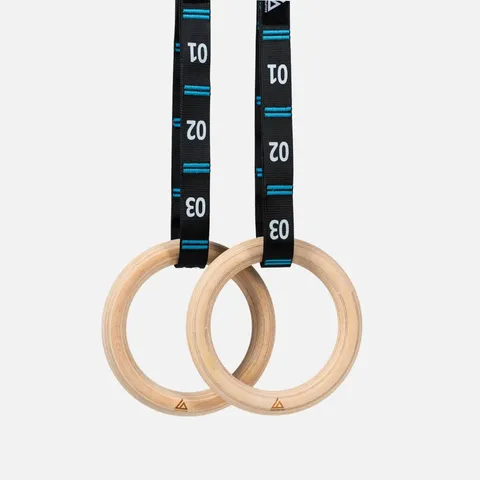
Strap length matters more than most guides cover. You need enough length to set rings low for rows and high for push-ups without readjusting each time. Most rings include 4 to 5 meters of strap per side, which covers most setups. Numbered markings on the strap make it faster to match both rings at equal height - a feature worth checking before buying.
Two other things separate a good strap from a cheap one. A cam buckle that locks without slipping under dynamic movements, and a strap width of at least 25 mm so it does not twist or cut into the anchor. Straps wear out long before the rings do: if a pair is sold with thin straps or plastic buckles, budget for a replacement set.
For the anchor, you need a fixed overhead point that takes body weight plus the shock of dynamic movements: a wall-mounted pull-up bar, an exposed beam, a ceiling joist or an outdoor bar. Doorframe bars are not suitable.
How to choose
For regular training, wood is the better choice. The grip difference on sweaty hands is noticeable during any high-rep set, and it only gets more relevant as you add volume. Beech and birch are both common materials and both perform well.
For occasional use, travel, or outdoor sessions where you take the rings down after training, plastic is fine and easier to clean.
If you plan to leave rings set up outdoors permanently, check whether the wood is treated for weather exposure. Most are not. Untreated wood left outside will eventually crack and lose its grip texture.
Which brands make rings
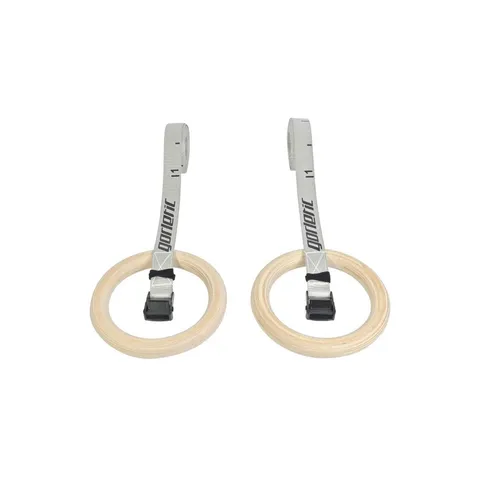
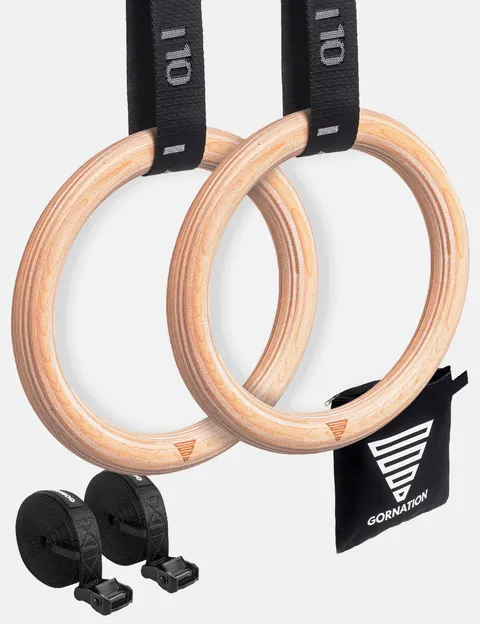
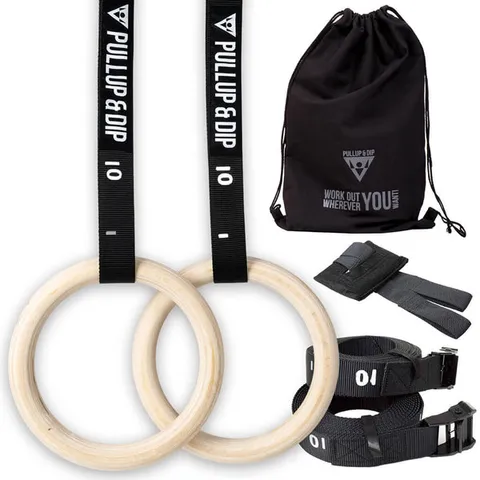
Gornation, Pullup & Dip, Gorletic and Caliathletics all sell wooden rings into the European market, and the difference between them is mostly straps and accessories.
Technique on rings
Keep wrists neutral during pressing movements. Ring push-ups and dips will feel unstable early on - this is correct. Let the rings settle into natural rotation rather than fighting to keep them still. Turning the rings out at the bottom of a push-up (thumbs pointing outward) reduces shoulder impingement risk.
For rows, set the rings at chest height and pull until the rings touch your torso. Keeping the body rigid through the movement - like a plank - is more important than adding range.
Straps should hang vertically, not angled toward the anchor point. Angled straps shift load direction and reduce the stabilizer demand that makes ring training effective.
Shoulder and wrist conditioning on rings takes longer than bar training. Three to four weeks of consistent ring work before adding significant volume is a reasonable approach.
FAQ
Gymnastic rings vs bar for calisthenics?
Rings cover both pushing and pulling, and the instability demands more from stabilizer muscles over time. A bar handles pull-ups and high-volume rows more efficiently. Most serious practitioners end up using both - rings for pushing and compression, bar for pulling.
What diameter gymnastic rings to buy?
28 mm is standard and fits most hand sizes. 32 mm is thicker - worth trying if you have large hands or specifically want to build grip strength during pressing sets.
Where to hang gymnastic rings at home?
You need a fixed overhead anchor: a wall-mounted pull-up bar, an exposed beam, or a ceiling joist. The anchor point needs to handle body weight plus the additional load from dynamic movements. Doorframe bars are not suitable for rings.
Are gymnastic rings harder than a bar?
Yes, for most movements. The instability increases the strength demand on stabilizer muscles throughout the movement. Most people who can do 10 clean bar push-ups will struggle to complete 5 ring push-ups with controlled form on their first session.
Wood or plastic rings for outdoor use?
Plastic for leaving outdoors long-term (weather resistance). Wood for regular training where you take the rings in after use - the grip quality justifies the extra care.
What are gymnastic rings also called?
Gym rings, calisthenics rings, Olympic rings and wooden rings all refer to the same thing: two grips on adjustable straps. “Olympic rings” points at the competition spec (28 mm grip, wood), not at a different product.
What should I check on the straps?
Length (4 to 5 m per side covers rows and push-ups without re-rigging), a cam buckle that holds under dynamic work, numbered markings to level both rings quickly, and a width of at least 25 mm. Straps wear out before the rings; cheap ones are the usual weak point.
Rings or a dip bar for dips?
Rings for range of motion and shoulder stability once you have 8 to 10 clean bar dips. A dip bar for learning the movement and for high-volume sets, because the fixed width lets you focus on the press. Most people end up with both.